
Moonshot AI: The Beijing Startup Behind the Kimi Chatbot
Moonshot AI is a Beijing artificial-intelligence company founded in March 2023 that builds the Kimi chatbot and a family of open-weight large language models. Backed by Alibaba, Tencent, and Meituan, the startup climbed to a $20 billion valuation in just over three years. Its flagship release, covered in depth in our guide to Kimi K3, anchors a product line that now generates more than $200 million in annual recurring revenue.
Who Founded Moonshot AI
Yang Zhilin, Zhou Xinyu, and Wu Yuxin started Moonshot AI in March 2023 in Beijing. The three were schoolmates at Tsinghua University, and Yang — the company’s CEO — went on to a doctorate at Carnegie Mellon before returning to China to chase artificial general intelligence full time. Moonshot AI grew from a small founding team to roughly 300 employees by 2026, a modest headcount for a company competing directly with labs many times its size.
The three founders split responsibilities early and stuck to them as the company scaled:
- Yang Zhilin — CEO, sets research direction and the company’s AGI-first strategy
- Zhou Xinyu — co-founder, brought deep-learning efficiency work from stints at Hulu, Tencent, and Megvii
- Wu Yuxin — co-founder, arrived with foundation-model experience from Google Brain and Meta AI Research
Chinese media grouped Moonshot AI with five other well-funded startups chasing frontier models under the label “AI Tigers”:
- Zhipu AI
- MiniMax
- Baichuan AI
- 01.AI
- StepFun
Of that cohort, Moonshot AI’s funding trajectory and its Kimi chatbot’s user base have made it one of the two or three names outsiders mention first when the group comes up.
The Funding Trajectory
Moonshot AI’s valuation rose faster than almost any other Chinese AI startup, climbing more than 60-fold in under three years without a public listing.
From Seed to Unicorn
The company raised a $60 million seed round at a roughly $300 million valuation shortly after founding. That number looked large for a pre-product startup in 2023, but it turned out to be a rounding error next to what followed. In February 2024, Alibaba led a $1 billion round that valued Moonshot AI at $2.5 billion — the deal that first put the startup on international radar and made Alibaba its anchor investor.
The 2026 Mega-Rounds
Momentum kept building into 2026. A Series C in January closed at $500 million, led by IDG Capital and oversubscribed by returning backers Alibaba and Tencent, pushing the valuation to $4.3 billion. That was only the first of several raises that year — Moonshot kept returning to backers as its revenue climbed, clearing $10 billion within weeks and pushing past $18 billion before a roughly $2 billion round led by Meituan lifted the figure past $20 billion in May.
| Round | Date | Amount raised | Valuation | Lead investor(s) |
|---|---|---|---|---|
| Seed | 2023 | $60M | $300M | Early-stage investors |
| Alibaba round | Feb 2024 | $1B | $2.5B | Alibaba |
| Series C | Jan 2026 | $500M | $4.3B | IDG Capital |
| Mega-round | May 2026 | ~$2B | $20B | Meituan |
That path — seed to $20 billion in roughly 38 months — outpaces the funding curve of most Western foundation-model labs, which typically take longer to clear each valuation tier.
Who Backs Moonshot AI
Three of China’s largest tech companies hold the biggest stakes in Moonshot AI, and each arrived at a different stage of the company’s growth.
| Backer | Stake / role | Entry point |
|---|---|---|
| Alibaba | ~36%, largest outside shareholder | Led the Feb 2024 round |
| Tencent | Return investor, no disclosed stake | Joined the Feb 2024 round and Series C |
| Meituan | Led the May 2026 round via its Long-Z arm | Newest but now dominant backer |
Alibaba’s position is the one worth understanding in most detail, since it predates the other two and set the template every later round followed. The company became Moonshot AI’s anchor investor in February 2024, well before Tencent or Meituan committed meaningful capital, and it has kept its stake through every subsequent funding round rather than diluting out.
That early commitment is documented in public financial disclosures rather than press quotes, which makes it easier to verify than most claims about Chinese startup ownership. According to Alibaba’s own annual filing with the U.S. Securities and Exchange Commission, the stake was built through a substantial, single-year commitment rather than a series of small top-ups:
Alibaba Group Holding Limited invested a total of approximately US$0.8 billion to acquire an approximately 36% equity interest in Moonshot AI during the fiscal year ended March 31, 2024.
Alibaba Group Holding Limited, SEC Annual Report
That single filing line explains why Alibaba, not a Silicon Valley fund, sits at the center of Moonshot AI’s cap table. The backing also matters technically, not just financially — Moonshot AI’s research into efficient attention mechanisms, detailed in our breakdown of Kimi Delta Attention, builds directly on the compute access that these investors’ cloud infrastructure provides. Ownership concentrated among three domestic giants also means Moonshot AI’s growth is tightly linked to China’s own AI policy and cloud capacity, rather than to a broad syndicate of international venture funds.
The Products: Kimi Chatbot and Open Weights
Moonshot AI ships two distinct product lines, and the split between them explains most of its business model.
The Kimi chatbot is the consumer front door. Launched in October 2023 and named after Yang Zhilin’s English nickname, Kimi started as a long-context assistant capable of handling roughly 200,000 Chinese characters per conversation. It grew into one of China’s top consumer AI chatbots on the strength of that long-document capability, competing for the same research-assistant use cases as Baidu’s Ernie Bot even as ByteDance’s Doubao pulled ahead on overall user numbers.
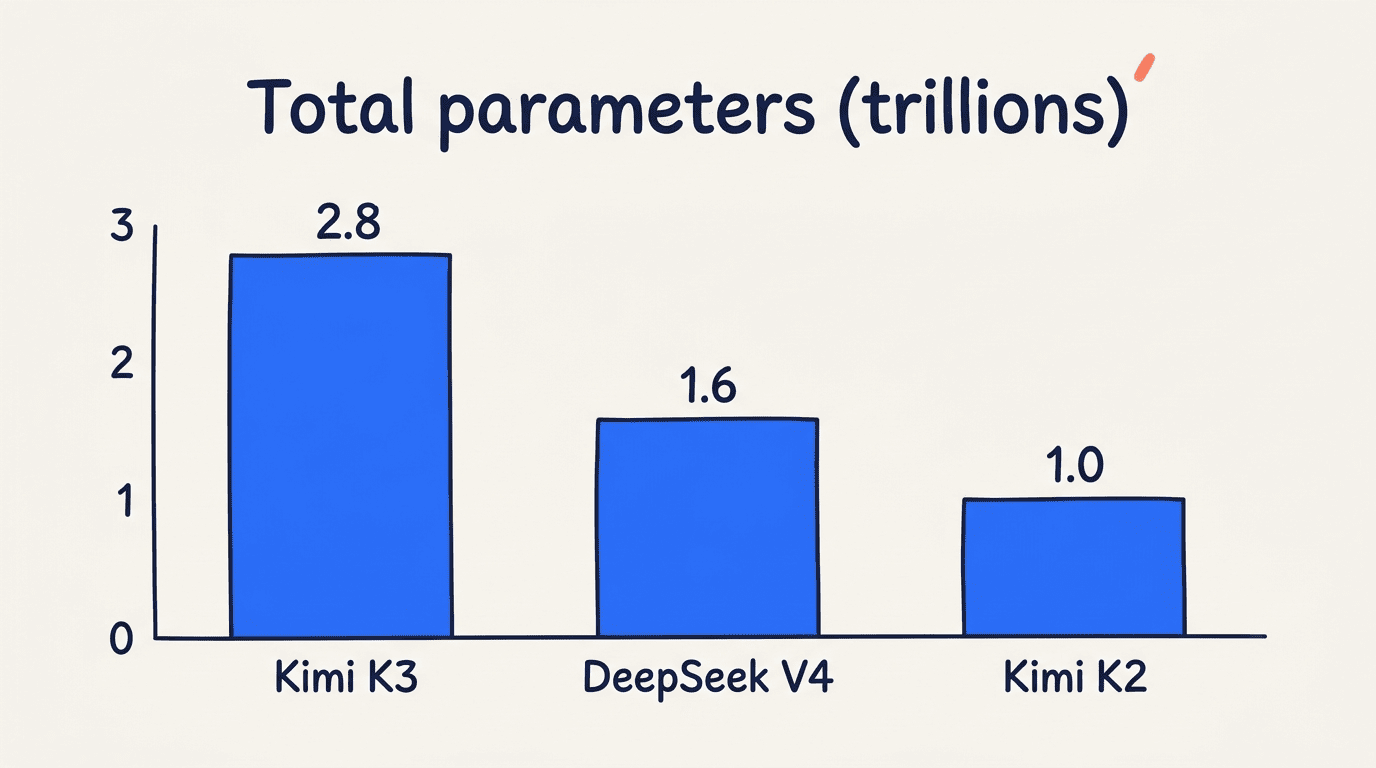
Kimi K2 opened the weights to developers. Released in July 2025, the Kimi K2 family — built on a roughly 1-trillion-parameter mixture-of-experts architecture — gave outside developers and enterprises a way to run Moonshot-grade models on their own infrastructure instead of only through the hosted chatbot.
The flagship model pushes both dimensions further. Context length and inference efficiency are the two axes Moonshot AI keeps stretching with each release; developers can wire the current flagship into their own stack through the official Kimi API quickstart docs, and our explainer on the 1-million-token context window covers exactly how far that scaling has gone and what it changes for long-document work.
Between the two product lines, the company covers both ends of the market:
- A subscription chatbot for individual users and researchers
- An open-weight model family for developers who need to self-host or fine-tune
- API access for businesses building on top of Moonshot’s models without managing their own infrastructure
If you want to see what a long-context assistant actually feels like, you can put a model to work in a live chat over at bota.chat.
Revenue and Business Model
Moonshot AI’s annual recurring revenue surpassed $200 million by April 2026, roughly double the figure reported just one month earlier. Two revenue streams drive that growth:
- Consumer subscriptions — tiered Pro plans for the Kimi chatbot
- Enterprise API and licensing — model access sold to businesses and state-owned enterprises building their own products on top of Moonshot’s models, billed through published pay-as-you-go pricing
That figure remains modest next to the company’s $20 billion valuation — a gap common among frontier-model labs, where investors are pricing long-term AGI potential rather than current subscription income.
Tracking how that gap narrows or widens over time takes a bit of manual digging, since Moonshot AI does not publish quarterly earnings the way a listed company would:
- Check Alibaba’s and Tencent’s own investor filings for updated stake disclosures, since both are public companies required to report material holdings
- Search recent funding announcements by round name (seed, Series C, mega-round) rather than by date, since Chinese outlets often lag international coverage
- Compare the reported valuation against the last disclosed ARR figure to see whether the revenue multiple is expanding or compressing
- Cross-reference any new backer against the “AI Tiger” peer group to see whether capital is consolidating around fewer startups
- Watch for Hong Kong IPO filings, which would be the first point Moonshot AI discloses audited financials publicly
Each new funding round has narrowed that revenue-to-valuation multiple somewhat, but Moonshot AI still trades on growth expectations more than trailing income — a pattern the market has tolerated because of how quickly the company’s user and developer numbers moved in the last two years.