
Google Flow AI Filmmaking: The Complete Guide to Conversational Video Creation
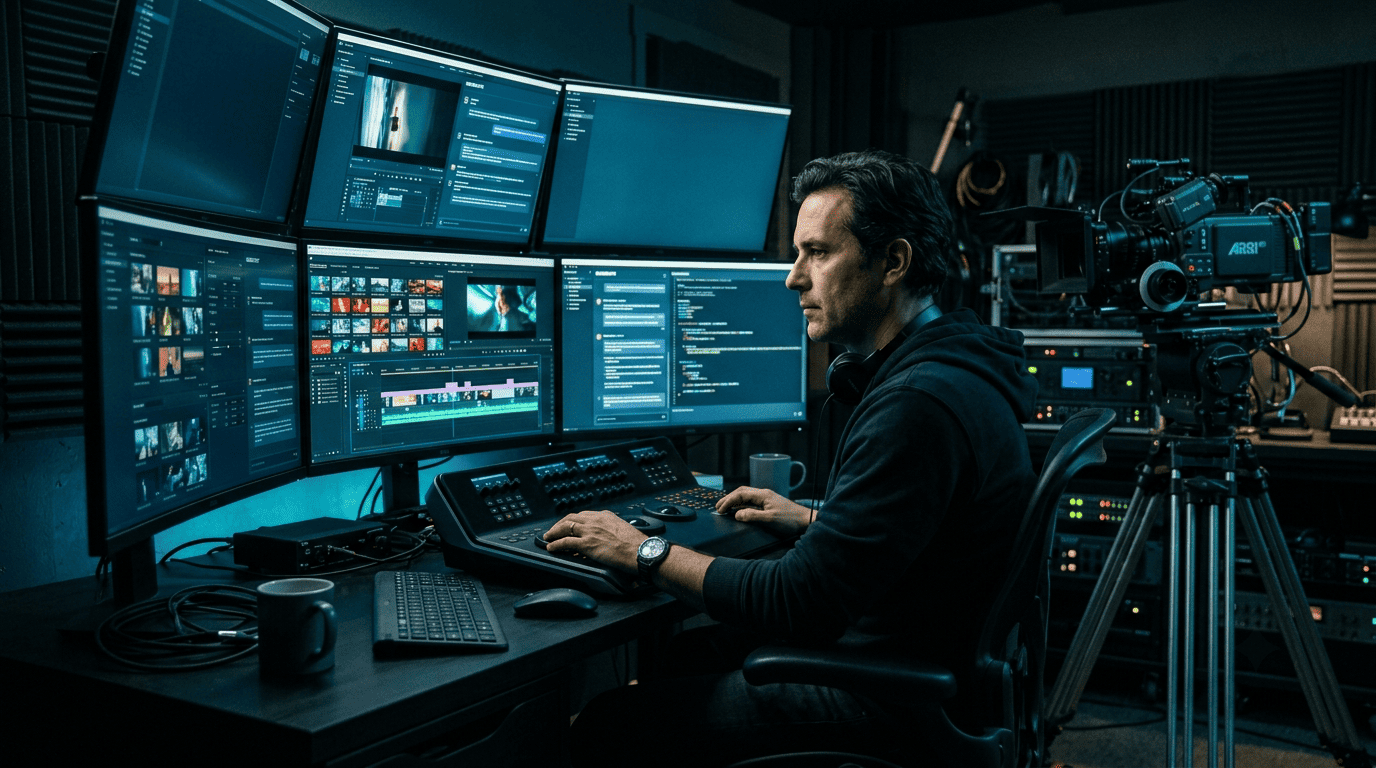
Google Flow is Google’s dedicated AI filmmaking platform — built on the gemini omni model family — that turns multi-step video production into a conversational workflow. Where most AI video tools generate a single clip and stop, Google Flow is built for longer narrative productions: scene sequencing, B-roll generation, shot continuity, and iterative refinement through natural language. Developed by Google Labs, it targets indie filmmakers, studios, and professional creators.
The Engine: Gemini Omni
Gemini Omni — announced by Google DeepMind at Google I/O 2026 on May 19, 2026 — is a unified multimodal model fusing four systems: the Gemini reasoning engine, Veo video rendering, Genie world-physics simulation (objects fall correctly, cloth deforms, water flows), and Nano Banana frame-level image editing. This “any-to-any” design lets Google Flow accept text, reference images (up to 7), existing clips, and audio at once, and return composited, physically plausible video.
Core Filmmaking Capabilities
Its defining feature is multi-turn conversational editing: after an initial scene, you refine it in plain language (“make the sky more dramatic,” “change the jacket to dark green,” “add fog to the forest scene”). Each instruction builds on the previous output while the model holds temporal consistency — the character in shot 3 matches shot 1, lighting continuity holds across cuts. It also handles scene generation from scripts, context-consistent B-roll, reference-to-video editing of footage you already shot, and avatar characters for consistent presenters across clips (a consent recording is required before any likeness is used).
Output is 720p MP4, up to 10 seconds, in 9:16 or 16:9. Every clip carries a SynthID watermark plus C2PA Content Credentials, so AI origin stays detectable after compression and re-encoding — increasingly required by broadcast and streaming standards.
Access and Pricing
| Tier | Price | Storage | Access |
|---|---|---|---|
| Google AI Plus | $7.99/mo | 200 GB | Google Flow included |
| Google AI Pro | $19.99/mo | 5 TB | Priority access + higher quotas |
| Google AI Ultra | $99.99/mo | 20 TB | Maximum quotas + early features |
Google Flow is not on the free YouTube tier (limited to Shorts and the Create App). Studios building custom pipelines can reach the same capabilities through the Gemini API, launched June 30, 2026 via Google AI Studio: model gemini-omni-flash-preview, endpoint POST /v1beta/interactions, priced at $0.10 per second of output ($1.00 per 10-second clip).
How It Compares
Google Flow’s edge is the combination of multi-turn conversational editing and Google ecosystem integration — not raw pixel fidelity, where independent reviewers note Gemini Omni Flash currently trails Seedance 2.0 and Kling 3.0. Competitors like Sora, Seedance, Kling, and Runway Gen-3 offer only limited editing and no free tier, and none are built for narrative production. Google Flow’s value is the iterative workflow that compresses a multi-day shoot-and-edit cycle into hours.
One limitation: editing or replacing speech/audio in existing videos is deliberately withheld pending safety testing (voice-cloning risk), so Flow cannot yet revoice footage or replace dialogue. Google has signaled the feature will arrive once testing completes. Get started: Google Flow | Gemini API docs | Google DeepMind Gemini.