
Gemini Omni: Google’s Any-Input-to-Video AI — Complete Guide (2026)
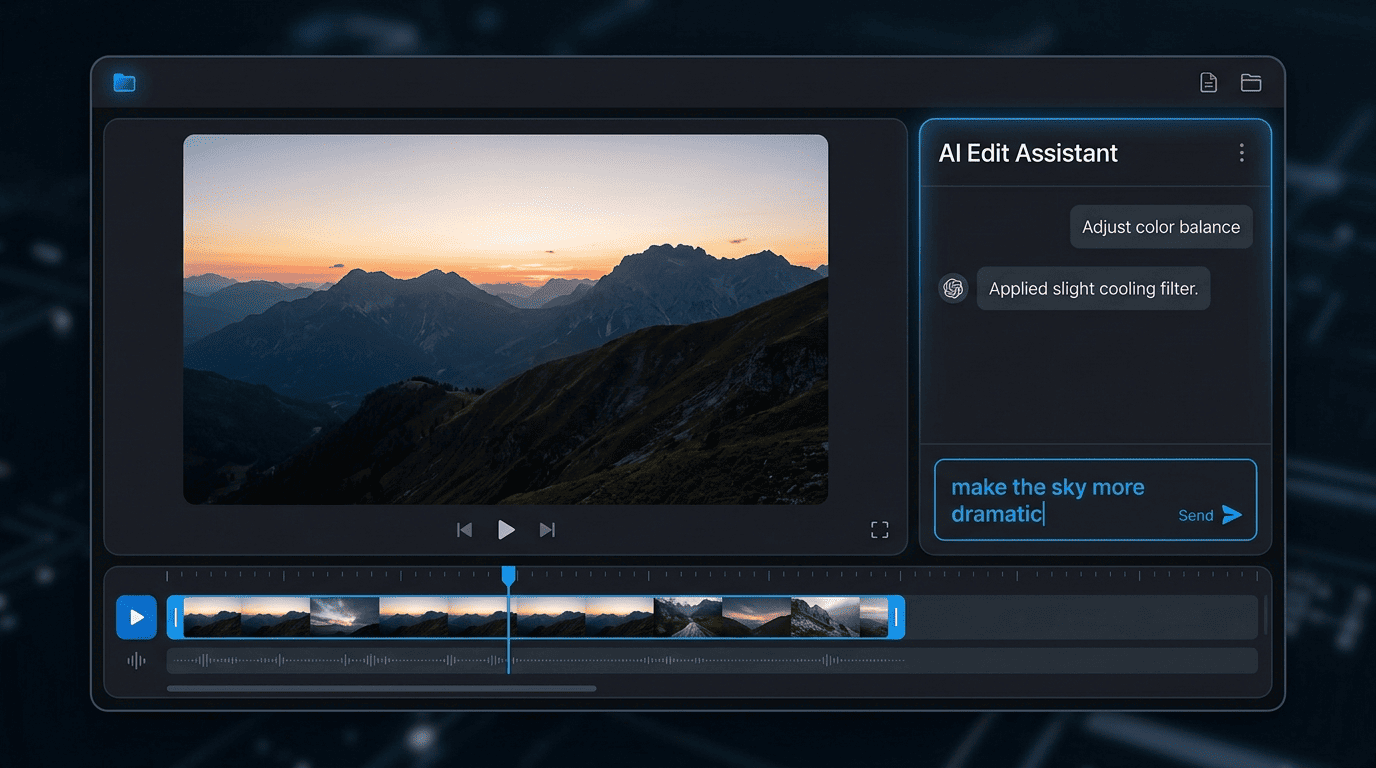
Gemini Omni is Google DeepMind’s native multimodal model that turns any combination of text, images, video clips, and audio into polished video through natural language conversation. Announced at Google I/O 2026 on May 19, 2026, it is not simply a video generator — it is a reasoning model that generates video, fusing four previously separate Google AI systems into one unified architecture. The first public release, Gemini Omni Flash (gemini-omni-flash-preview), is free on YouTube Shorts, available to Google AI subscribers, and accessible to developers at $0.10 per second of output video via the Gemini API.
What Is Gemini Omni? Definition and Core Concept
Gemini Omni is Google DeepMind’s answer to a fundamental limitation of earlier video tools: they could only accept a single input type (usually text) and had no memory between generations. This all-in-one AI model breaks both constraints. You can feed it a product photo, a voiceover script, and a background clip simultaneously — and then keep refining the result through natural language, turn by turn, without losing context from the previous edit.
The “Any-to-Any” Paradigm
Where Veo 3.1 was a dedicated text-to-video renderer, Gemini Omni accepts text, images, existing video clips, and audio all at once, outputting video as the unified result. This any-to-any generative model architecture means the input combinations are genuinely open-ended: you might start with a still product image, layer in a voiceover script, point to a background video reference, and get a composited, motion-coherent result.
Google DeepMind CTO Koray Kavukcuoglu introduced Gemini Omni Flash as the first model in the Gemini Omni family at the Google I/O 2026 keynote. He described the project as making Gemini’s reasoning layer inseparable from the video synthesis layer — not a wrapper around a video model, but a single model where language understanding and video generation share the same weights.
Gemini Omni vs Veo 3.1: The Key Difference
Veo 3.1 renders what you describe. Gemini Omni understands what you mean. That distinction matters more than it sounds: Veo 3.1 interprets a prompt and produces frames; Gemini Omni reasons about your intent, picks the appropriate internal tool (rendering, physics simulation, or image editing), applies the change, and preserves everything else from the prior generation. A Gemini Omni Pro tier is expected but has no confirmed release date.
Architecture: How Gemini Omni Works Under the Hood
Gemini Omni’s architecture fuses four previously separate Google AI systems into one model. Understanding each subsystem explains why the model behaves so differently from conventional video generators — and why Google positions it as a platform, not just a product.
Four Fused Subsystems
The four components are tightly integrated rather than pipelined:
- Gemini reasoning engine — handles language understanding, instruction-following, and multi-turn context. This is why you can say “make the sky more dramatic” and the model knows which part of the video to target.
- Veo video rendering — the high-fidelity synthesis layer responsible for the actual frames. This is the same rendering technology that powered the standalone Veo 3.1 model.
- Genie world simulation — a physics engine that keeps motion physically plausible: objects fall with correct trajectories, water moves with surface tension, cloth deforms under gravity. Without Genie, generated motion can look synthetic or impossible.
- Nano Banana image editing — handles precise spatial editing of individual frames within a video clip, enabling granular changes (swap the jacket color, erase an object from a single frame) without regenerating the whole clip.
World Model Physics in Practice
Because Genie is embedded at the model level — not bolted on as post-processing — Gemini Omni can generate accurate scientific visualizations from scratch. The canonical example from Google’s own demos: a claymation explainer of protein folding where the structural transitions are physically correct, not just visually convincing. Achieving this requires world knowledge plus physics simulation, not pattern matching.
Output specs for the current Flash release: 720p MP4, clips capped at 10 seconds, aspect ratios 9:16 (portrait, optimized for YouTube Shorts) and 16:9 (landscape, default). Google has confirmed the 10-second cap is a deployment choice, not a hard model limit.
What Inputs Gemini Omni Accepts
The model’s input flexibility is one of its strongest practical differentiators. Most competing video generators accept a text prompt and, optionally, a single reference image. Gemini Omni accepts a richer payload through a dedicated endpoint.
Input Types and Task Parameters
The Interactions API — a separate endpoint from the standard generateContent call — defines four task modes:
| Task parameter | What it does | Accepted inputs |
|---|---|---|
text_to_video | Generates video from a text prompt | Text |
image_to_video | Animates or composes reference images | Up to 7 images (JPEG/PNG/WebP) + text |
reference_to_video | Edits an existing video clip | MP4/WebM clip + editing instruction |
edit | Continues a multi-turn conversational session | Session ID + new instruction |
Multi-Turn Context
Unlike one-shot generators, Gemini Omni maintains a session across turns. The model remembers what it generated in turn 1 when you give it a new instruction in turn 4. You can refine lighting in turn 2, change the subject’s outfit in turn 3, and adjust a timing cue in turn 4 — all without regenerating from scratch. The Interactions API returns a session ID on the first call; pass it back in subsequent calls to maintain continuity.
Conversational Editing: The Flagship Capability
Conversational editing is the feature that most clearly separates Gemini Omni from every other video AI on the market in 2026. Most models treat each generation as a fresh request. Gemini Omni treats a video project as a conversation — and the model is always listening to what you said earlier.
After generating an initial video, you continue in plain English: “make the sky more dramatic,” “slow down the middle section,” “change the character’s jacket to red.” The model applies the change while preserving unaffected elements. Temporal consistency — keeping the same subject, lighting logic, and scene across edits — is maintained automatically. This is technically hard: most video models struggle to make a localized change without destabilizing the whole clip.
What Is Deliberately Withheld: Audio and Speech Editing
Google has confirmed one conspicuous gap: editing or replacing speech and audio in existing videos of real people is technically possible but deliberately withheld. The stated reason is additional safety testing around voice-cloning and deepfake misuse. Users cannot currently use Gemini Omni to revoice existing footage. All generated and edited videos automatically receive a SynthID digital watermark. The audio editing restriction is expected to be revisited after the safety framework matures.
“In terms of editing videos to change audio and speech, we are still working to test this — we’re taking the time to ensure we develop this capability responsibly.”
Google DeepMind, Gemini Omni Launch Post, May 2026
For prompt strategies and practical examples of multi-turn editing sessions, see our deep dive on conversational video editing AI.
Gemini Omni Flash vs Pro
The Gemini Omni family follows the same tiered structure as the broader Gemini model lineup: Flash for speed and cost-efficiency, Pro for quality and capability. Only Flash is publicly available as of mid-2026.
Gemini Omni Flash (Available Now)
Model ID: gemini-omni-flash-preview. Output resolution: 720p MP4. Maximum clip length: 10 seconds. Supported aspect ratios: 9:16 and 16:9. API price: $0.10 per second of output video, meaning a 10-second clip costs $1.00. Available since June 30, 2026 via Google AI Studio and the Gemini API. Independent reviewers note that raw motion fidelity currently trails Seedance 2.0 and Kling 3.0, though the conversational editing workflow has no direct equivalent.
Gemini Omni Pro (Coming Soon)
No release date has been confirmed. Based on the Flash/Pro pattern in other Gemini model lines, Pro is expected to deliver higher output resolution, longer clip support, and stronger motion consistency. Google has described the Omni family as an ongoing model series, not a one-time release.
Pricing: Free, Subscriber, and API Tiers
Gemini Omni has one of the most accessible pricing structures of any frontier video AI, primarily because it ships with YouTube — one of the largest consumer platforms on Earth.
Free Access via YouTube
Gemini Omni Flash is free for all users through YouTube Shorts and the YouTube Create App. No subscription, no API key, no quota to worry about. YouTube Shorts receives 200 billion daily views — a milestone reported by YouTube CEO Neal Mohan in June 2025 — making this the largest-scale consumer deployment of any AI video model to date. The Create App is optimized for the 9:16 portrait format native to short-form video.
Google AI Subscription Tiers
| Plan | Monthly price | Storage | Access |
|---|---|---|---|
| Google AI Plus | $4.99 | 400 GB | Gemini Omni + standard quota |
| Google AI Pro | $19.99 | 5 TB | Higher generation quota |
| Google AI Ultra (5x) | $99.99 | 20 TB | Priority access + 5x quota |
| Google AI Ultra (20x) | $199.99 | 20 TB | Maximum quota + YouTube Premium |
All subscriber tiers also include access via Google Flow, Google’s AI filmmaking tool designed for longer narrative productions rather than short-form clips.
Developer and Enterprise API
Available since June 30, 2026 via Google AI Studio. Pricing: $0.10 per second of output video. Endpoint: POST https://generativelanguage.googleapis.com/v1beta/interactions. Python SDK (google-genai) and JavaScript SDK (@google/genai) are both supported. The API returns output as a base64-encoded MP4.
How to Use the Gemini API for Video Generation
Getting started with the Interactions API requires an API key and a few configuration choices that differ from the standard Gemini generateContent endpoint. Here is the step-by-step flow:
- Get an API key from Google AI Studio at ai.google.dev. Free-tier keys are available for experimentation.
- Install the SDK — Python:
pip install google-genai; JavaScript:npm install @google/genai. - Use the Interactions API endpoint, not
generateContent. The endpoint isPOST https://generativelanguage.googleapis.com/v1beta/interactions. - Set the model to
gemini-omni-flash-previewin your request payload. - Choose a task parameter:
text_to_video,image_to_video,reference_to_video, oreditfor multi-turn continuation. - Submit reference inputs if needed — for
image_to_video, include up to 7 images (JPEG/PNG/WebP); forreference_to_video, attach an existing MP4 or WebM clip. - Decode the response — the API returns a base64-encoded MP4. For conversational sessions, capture the
session_idfrom the response and include it in subsequent requests to maintain context.
For text_to_video, the minimum viable payload is a model name, task parameter, and text prompt. The edit task parameter requires a valid session_id from a prior turn; without it, the model treats the call as a fresh generation.
For complete code samples and SDK walkthroughs, see our in-depth reference on Gemini API video generation.
Avatar Creation Feature
Gemini Omni includes an avatar creation capability that goes beyond one-off video generation. An avatar is a consistent AI-rendered likeness — a persistent visual identity that can appear across multiple generated clips without drifting in appearance, expression style, or voice characteristics.
What avatars enable in practice is a new category of branded video content: a company can create a consistent AI presenter for product explainers, an educator can build a recurring character for a curriculum series, or a creator can maintain a synthetic on-screen presence without filming new footage each time.
Consent safeguards are mandatory before use. Before a likeness — face or voice — can be modeled, the user must complete a consent recording process that confirms they own the rights to that identity. Bypassing this step is not possible through the API; it is a gating mechanism, not a disclaimer. All avatar-generated videos carry SynthID watermarks, making AI provenance detectable even after social media recompression.
Safety: SynthID Watermarking and Deepfake Protections
AI-generated video is now convincing enough that humans correctly identify deepfakes only ~25% of the time — barely above random chance. This is the threat environment Gemini Omni’s safety stack was designed for.
SynthID: Invisible but Detectable
Every Gemini Omni output carries a SynthID digital watermark — an imperceptible signal embedded in the video pixels that survives compression, cropping, and re-encoding. Google’s SynthID system has already marked over 100 billion AI-generated images and videos across its products. Detection tools can identify the watermark even after the aggressive recompression that social platforms apply to uploaded video.
C2PA Content Credentials and the Audio Restriction
Alongside SynthID, Gemini Omni embeds C2PA Content Credentials — an industry-standard provenance metadata format that platforms and fact-checkers can read to confirm AI origin. This two-layer approach (invisible watermark + readable metadata) is designed to work even when one layer is stripped.
The most consequential safety decision is the deliberate withholding of audio/speech editing of existing videos. Voice cloning of real people is the highest-misuse-risk capability in this technology category; Google confirmed the feature exists in the model but will not ship until the safety framework is validated. This is a direct response to the deepfake voice-cloning incidents that became high-profile issues in 2025.
For a complete technical breakdown of how watermarking and provenance work, see our guide to SynthID AI watermark video.
How Gemini Omni Compares to Competitors
Gemini Omni Flash entered a competitive market where Sora, Seedance 2.0, Kling 3.0, and Runway Gen-3 were already established. The competitive picture is nuanced: on raw motion quality, Flash is not the leader; on conversational workflow and accessibility, it has no peer.
Gemini Omni Flash vs Sora, Seedance 2.0, Kling 3.0
| Model | Developer | Motion quality | Conversational editing | Free tier | API pricing |
|---|---|---|---|---|---|
| Gemini Omni Flash | Google DeepMind | Good (720p) | Multi-turn | YouTube Shorts | $0.10/sec |
| Sora | OpenAI | Excellent | None | No | Limited |
| Seedance 2.0 | ByteDance | Excellent | Limited | No | Yes |
| Kling 3.0 | Kuaishou | Excellent | Limited | No | Yes |
| Runway Gen-3 | Runway | Very good | Limited | No | Yes |
Independent reviewers consistently rate Gemini Omni Flash below Seedance 2.0 and Kling 3.0 on motion fidelity metrics at this stage. The motion physics can feel slightly smoother in those models on complex scenes. However, neither Seedance nor Kling offers genuine multi-turn conversational editing or a free consumer distribution channel at YouTube’s scale.
Where Gemini Omni Wins
Multi-turn conversational editing is unique — no other frontier video model in 2026 matches Gemini Omni’s ability to maintain session context across multiple edits. Sora, Seedance 2.0, and Kling 3.0 all treat each generation as independent. Deep ecosystem integration with Google Search, Google Photos, and YouTube is a distribution advantage that cannot be replicated by standalone model providers. Google Photos Video Remix — launched July 8, 2026 in 14 countries — extends this reach into consumer photo libraries. For teams already building on Google Cloud, the Gemini API integration also simplifies the authentication and billing stack considerably.
Use Cases: What You Can Create With Gemini Omni
The combination of any-input-to-video generation, multi-turn editing, and free consumer access via YouTube Shorts opens use cases that were previously gated behind expensive software or professional production teams.
Social Media and Short-Form Content
YouTube Shorts’ 200 billion daily views make it the most-watched short-video platform on Earth, and Gemini Omni Flash is embedded directly in the creation flow. Creators can generate a Shorts clip from a text prompt, iterate on it through conversational edits, and publish — all without leaving the YouTube Create App. The native 9:16 output and 10-second clip length are exactly what the platform algorithm rewards.
Marketing and Product Videos
Feed a product image alongside a brand guidelines document and voiceover script; receive a polished product video. Iteratively adjust (“make the product larger in frame,” “switch background to a kitchen scene”) without restarting from zero. The multi-turn memory means each refinement builds on the previous accepted state rather than regenerating the whole clip from a modified prompt.
Education and Scientific Explainers
World Model Physics makes Gemini Omni particularly useful for educational content that requires physical accuracy. A teacher can generate a claymation explainer of protein folding, a geological cross-section forming over time, or a mechanical system in motion — without any animation software expertise. The physics simulation layer ensures the motion is scientifically plausible, not just visually decorative.
Professional Filmmaking via Google Flow
Google Flow integrates Gemini Omni for longer narrative productions: scene generation from storyboard descriptions, B-roll creation from script excerpts, and shot-to-shot continuity editing where the model maintains consistent lighting and character appearance across cuts. This tier is aimed at independent filmmakers and content studios rather than casual social creators.
For a full walkthrough of scene generation, B-roll, and continuity workflows, see our dedicated guide to Google Flow AI filmmaking.