
Codex Micro: OpenAI’s $230 AI Agent Keyboard — Full Review and Specs
The Codex Micro is OpenAI’s first branded hardware product — a compact programmable macropad co-designed with Work Louder that puts 13 mechanical keys, a planar joystick, and a rotary reasoning dial on your desk for hands-on control of Codex AI coding agents. It launched July 15, 2026, sold out within hours, and now resells on eBay for $800–$900. OpenAI announced the device through its official newsroom, positioning it as a physical control layer for the agentic era of software development. This guide covers every spec, the Agent Key RGB color system, setup steps, an honest comparison to the Stream Deck and Creator Micro 2, and whether the $230 retail price (or the resell market) is worth it.
What Is the Codex Micro?
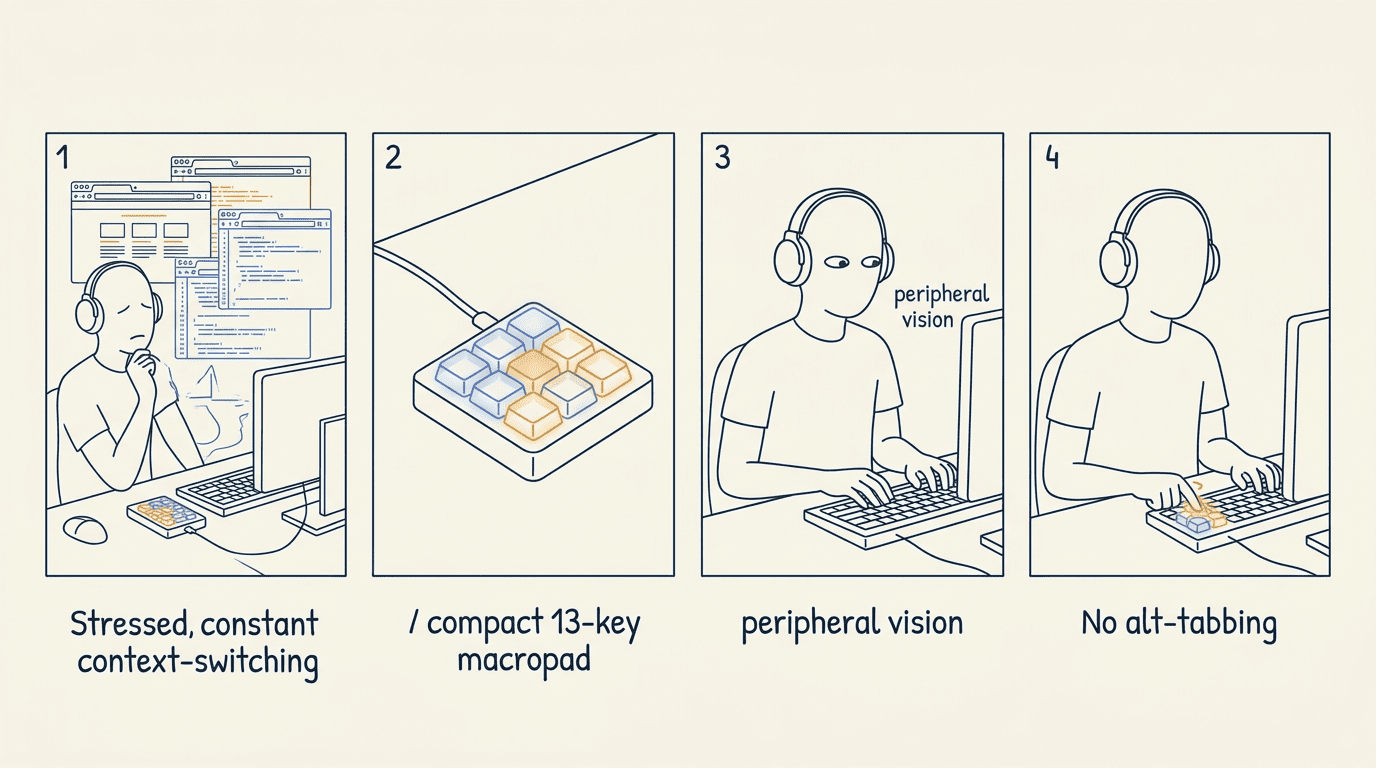
The Codex Micro is a physical keyboard for AI agents — a compact input device, technically a macropad, built around the specific workflow of running Codex coding sessions. OpenAI partnered with Work Louder, a small hardware studio known for building custom input controllers for companies like Figma, to design a command center for agentic work that lets developers accept, reject, and steer AI tasks without switching context.
This is not the Jony Ive project. The io Products initiative (Ive’s separate hardware venture with OpenAI backing) is still unreleased. The Codex Micro is a distinct, limited-run collaboration sold exclusively through OpenAI’s Supply Co. storefront. It was teased June 29, 2026 at AI Engineer World Fair — the reveal video hit approximately 1 million views in 24 hours — before shipping July 24 to buyers who ordered at launch.
The device targets the 10M+ weekly active Codex and ChatGPT Work users who want tactile, one-hand control of their AI coding sessions without leaving the keyboard. Single tap selects an agent session; double-tap brings it to the foreground. That core idea — physical feedback for digital AI agents — is what separates the Codex Micro from a generic macropad like the Stream Deck.
We wanted something that felt inevitable on a developer’s desk — the same way a physical volume knob feels right even when software controls exist.
Work Louder, product announcement, June 2026
Who It’s For
Developers who run parallel Codex sessions benefit most. If you’re constantly alt-tabbing to check whether an agent finished, hit an error, or needs your input, the Agent Key RGB system solves that at a glance. The keyboard is not a general-purpose macropad — it’s purpose-built for agentic AI workflows and ecosystem-locked to OpenAI’s ChatGPT desktop app for configuration.
Full Specs: Everything in the Box
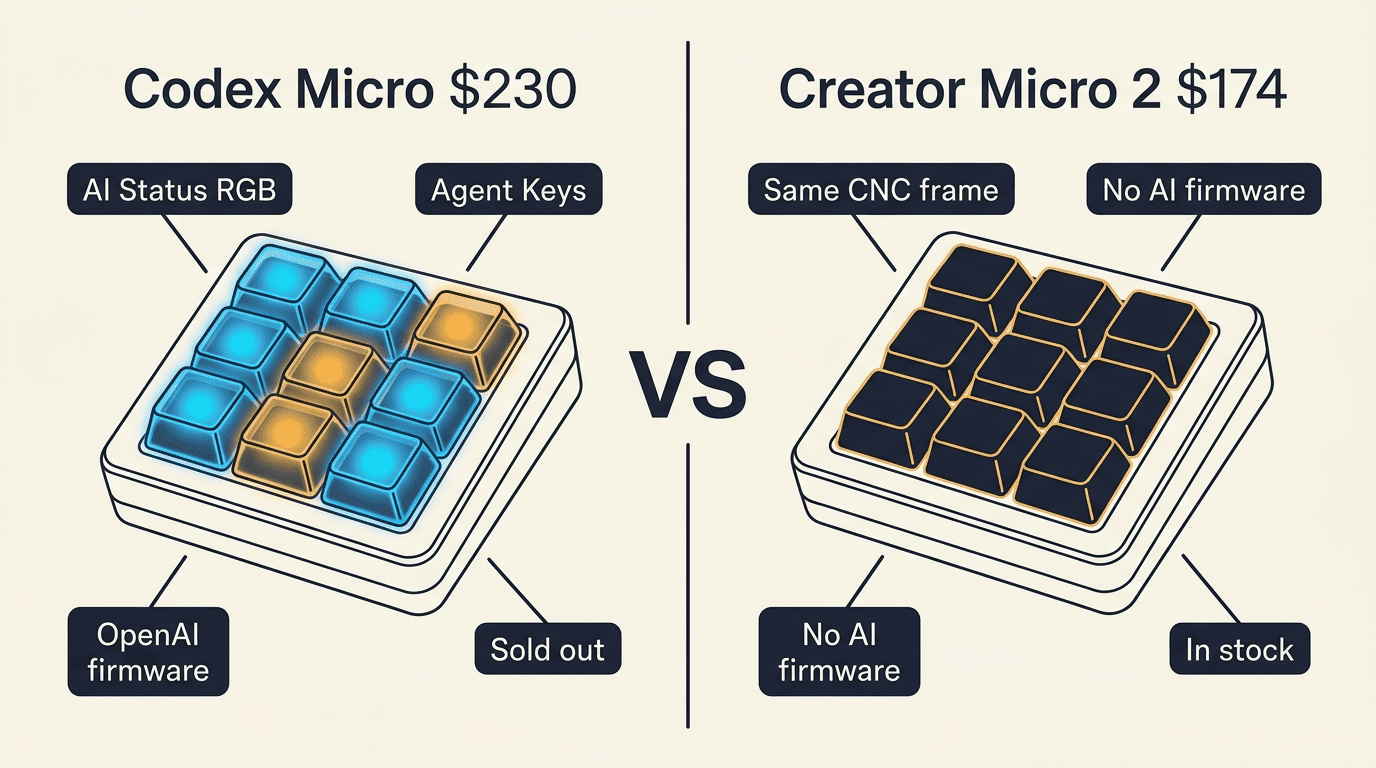
The Codex Micro is built on the Creator Micro 2 platform — Work Louder’s standard macropad base — with OpenAI-specific firmware, Agent Key hardware, and custom keycaps layered on top. The physical construction is identical: CNC-milled aluminum base with a sandblasted anodized finish and frosted polycarbonate top for the LED edge diffusion.
| Component | Detail |
|---|---|
| Mechanical switches | 13 (clicky POM-POK or silent — chosen at checkout) |
| Agent Keys | 6 translucent frosted keys with live RGB |
| Command Keys | 6 bottom-row fully programmable keys |
| Planar joystick | 1 (triggers: PR review, debug, refactor) |
| Rotary encoder | 1 reasoning dial (adjusts reasoning depth in real time) |
| Touch sensor | 1 capacitive touch sensor |
| Keycaps included | 32 custom Codex icon caps + 11 solid-color caps |
| Programmable layers | 6 |
| Connectivity | Bluetooth (BLE) + USB-C |
| Compatibility | macOS + Windows |
| Frame | CNC-milled aluminum + sandblasted polycarbonate |
| Ships | July 24, 2026 (launch orders) |
The identifier on the device itself reads kbd-1.0-codex-micro — a firmware version string that suggests OpenAI and Work Louder plan iterative hardware updates.
Switch choice is locked at purchase: you can’t switch between clicky and silent after ordering. Both options use low-profile keycaps. The acrylic LED edge lighting on the six Agent Keys is frosted to diffuse the RGB glow evenly across the translucent surface — visually distinct from any standard macropad.
Agent Keys: How the RGB Status System Works
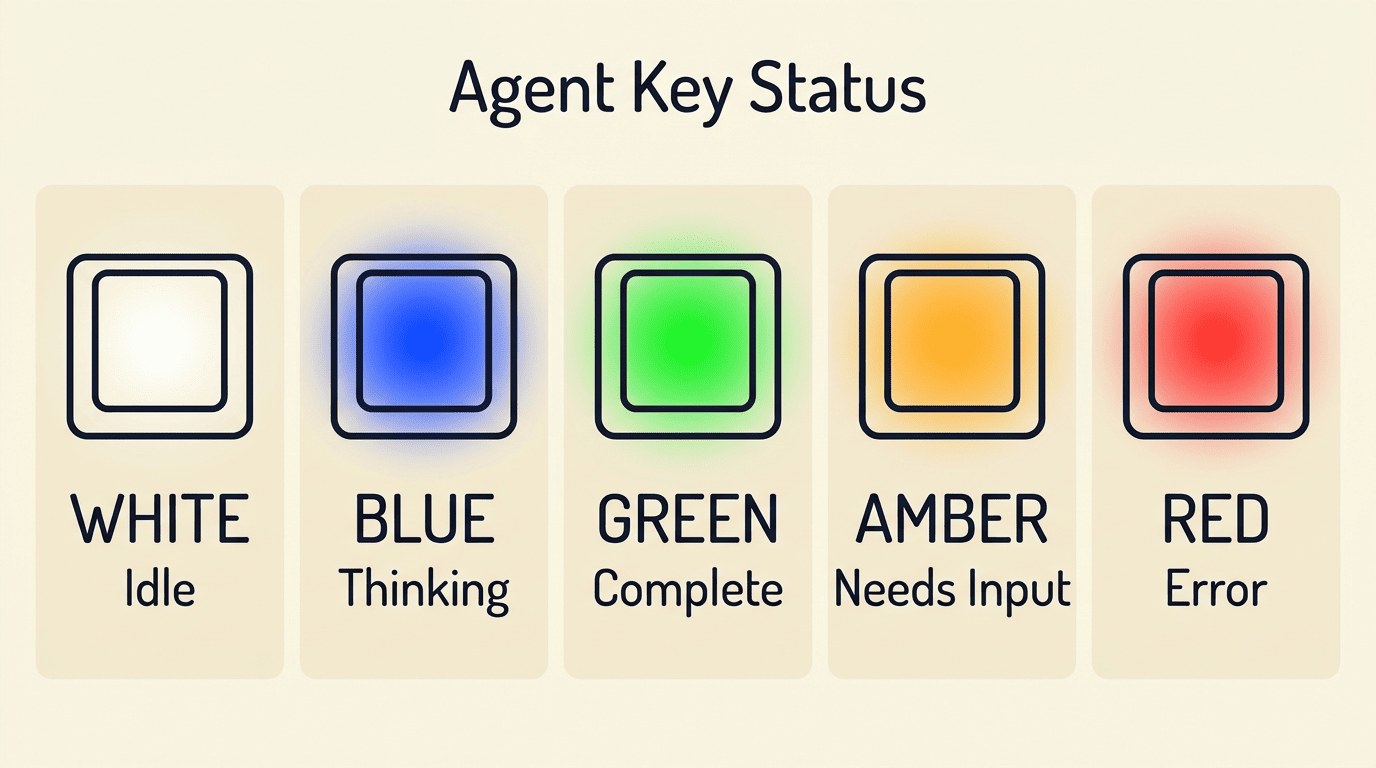
The six Agent Keys are the product’s defining feature. Each key maps to one Codex session and displays its live status through five RGB states:
| RGB Color | Agent Status | What It Means |
|---|---|---|
| White | Idle | Agent is waiting for a task |
| Blue | Thinking | Agent is processing or running code |
| Green | Complete | Task finished, unread response |
| Amber | Needs input | Agent is blocked, waiting for your decision |
| Red | Error | Something went wrong |
A single tap selects that agent session; a double-tap brings its window to the foreground on screen. This means you can monitor up to six parallel Codex tasks without looking at your monitor — glance at the keyboard, see amber, tap the key, and deal with the input request. That peripheral-vision workflow is the real ergonomic argument for the Codex Micro over a purely software solution.
Key remapping, layer switching, and agent assignments are all managed through the ChatGPT desktop app — available on macOS and Windows. There is no standalone driver, no web app, no third-party configuration tool. If you’re not using the ChatGPT desktop app, the Agent Key firmware is effectively unavailable, locking the device tightly to OpenAI’s ecosystem.
The 6 Command Keys on the bottom row can be assigned to any action. Default mappings include:
- Accept (approve the agent’s proposed change)
- Reject (discard the current suggestion)
- New chat (open a fresh Codex session)
- Push-to-talk (voice dictation)
- Two user-configurable slots
Layer switching lets you create up to 6 different profiles — useful if you alternate between Codex sessions and other workflows.
Price, Availability, and the Resell Market
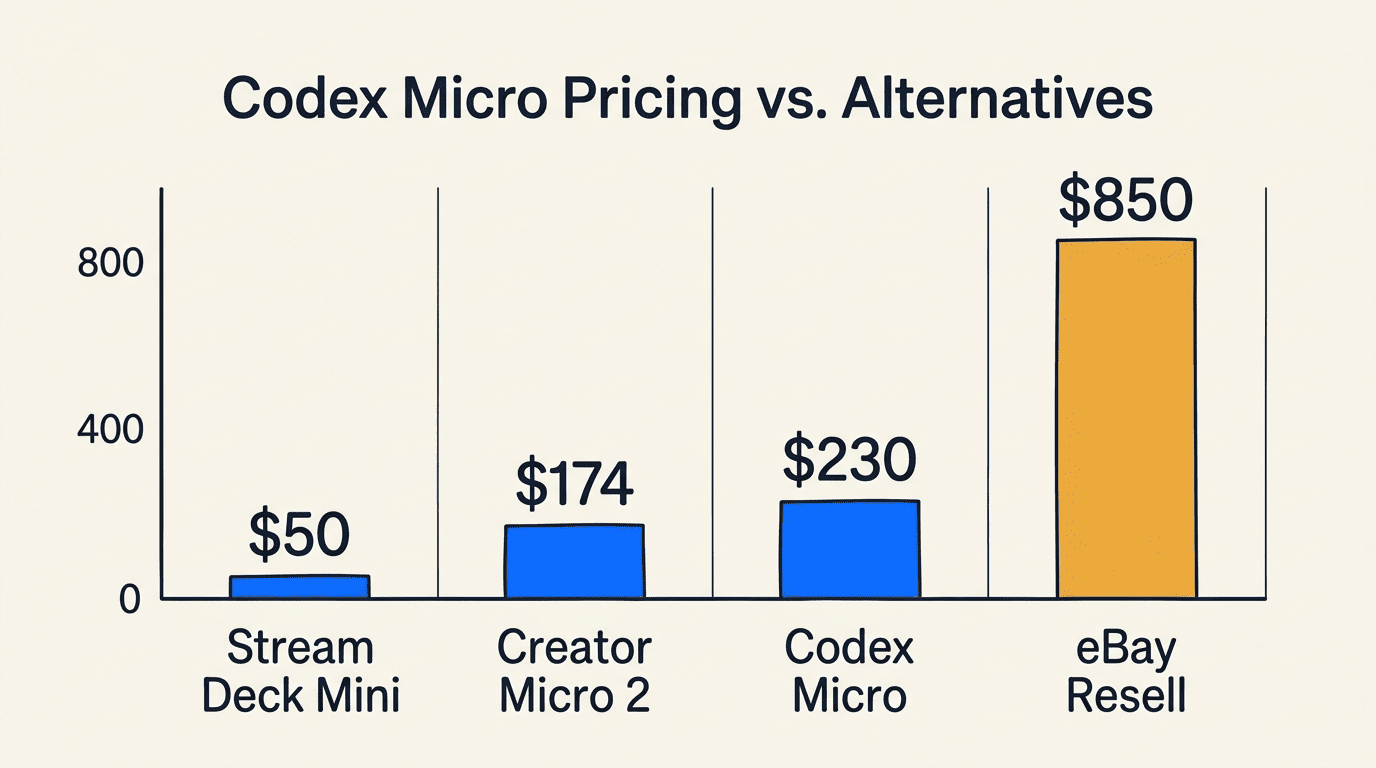
The Codex Micro launched at $230 on July 15, 2026 through the OpenAI Supply Co. storefront. It sold out within hours of going live.
As of this writing, OpenAI has not confirmed a restock date. The product page reads “available while supplies last,” which suggests this is a limited-edition run rather than a continuously stocked product. International shipping at launch was approximately £70 for UK buyers, adding meaningful cost for non-US customers.
Secondary market pricing tells its own story:
- eBay listings settled in the $800–$900 range within the first week
- That’s approximately 3–4× the retail price
- The Creator Micro 2 — same physical hardware platform — retails for $174 with no scarcity premium
The resell markup reflects demand and novelty, not a proportional jump in utility. For most buyers, paying $800+ for a $230 device that competes with a $174 alternative is difficult to justify on hardware value alone. The premium is entirely for the Agent Key firmware, the Codex icon keyset (32 custom caps), and the OpenAI branding.
How to Set Up and Use the Codex Micro
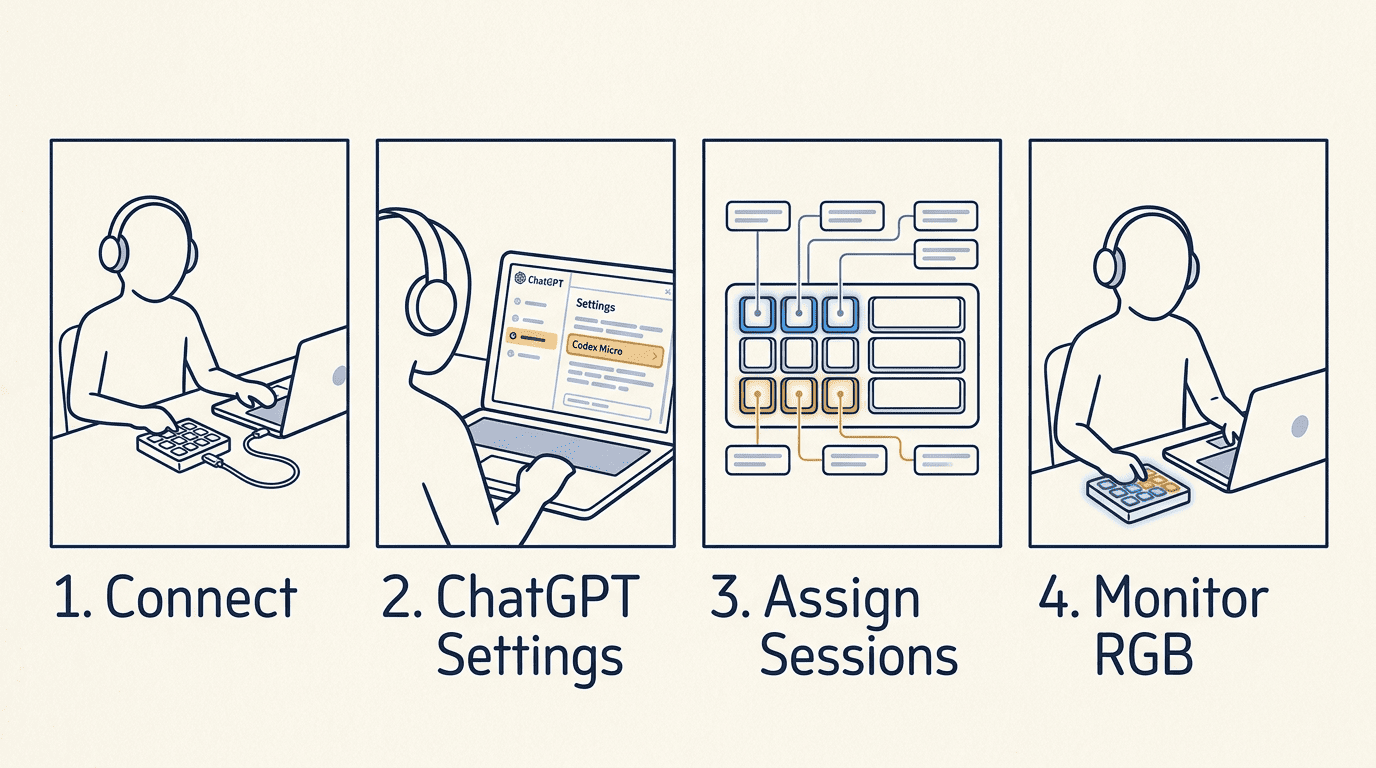
Getting started takes under 10 minutes if the ChatGPT desktop app is already installed.
- Connect the Codex Micro via USB-C or pair it via Bluetooth (BLE) to your Mac or Windows machine.
- Open the ChatGPT desktop app and navigate to Settings → Codex Micro.
- Assign each of the 6 Agent Key slots to an active Codex session.
- Remap the 6 Command Keys to your preferred actions — accept, reject, push-to-talk, new chat are the recommended starting defaults.
- Set the rotary reasoning dial behavior: rotate left for faster, cheaper reasoning; rotate right for deeper, slower reasoning on the active session.
- Program the planar joystick directions: default assignments are PR review (up), debug pass (left), and refactor (right).
- Save the configuration and start a Codex session — the Agent Key for that slot will immediately begin reflecting live status via RGB.
The push-to-talk key (the large button) activates voice dictation for hands-free prompting. This is especially useful when you’re mid-flow on a physical keyboard and want to issue a natural-language instruction to Codex without breaking rhythm.
The six programmable layers let power users create different configurations for different project types — frontend work, infrastructure, or pure code review — and switch between them with a dedicated layer key.
Codex Micro vs. Stream Deck vs. Creator Micro 2
The three devices most often compared to the Codex Micro occupy different positions in the market:
| Feature | Codex Micro ($230) | Creator Micro 2 ($174) | Stream Deck (varies) |
|---|---|---|---|
| Agent Keys with live RGB | 6 keys | None | None |
| Native Codex / ChatGPT integration | Built-in | None | Plugin-only |
| Rotary reasoning dial | Yes | No | No |
| Planar joystick | Yes | Yes | No |
| Programmable layers | 6 | 6 | Varies by model |
| Ecosystem lock-in | OpenAI only | None | Elgato / plugins |
| Available now | Sold out | Yes | Yes |
| Price | $230 | $174 | $50–$250 |
The Creator Micro 2 is the same physical platform — same CNC aluminum frame, same switch options, same joystick — without the Agent Key RGB firmware, Codex icon keyset, or ChatGPT app integration. The $56 price delta is entirely attributable to those software and cosmetic additions. If you want a flexible macropad without OpenAI lock-in, the Creator Micro 2 is the cleaner choice and it’s in stock.
The Stream Deck from Elgato offers the widest software integration across apps — streamers, video producers, and developers all use it — but it has no native connection to Codex or ChatGPT. Any AI-related function requires a community plugin, and none replicate the live RGB agent-status system. The Stream Deck wins on breadth; the Codex Micro wins on depth for one specific workflow.
Is the Codex Micro Worth $230?
At retail, the Codex Micro makes the most sense for a specific kind of user. It’s a reasonable purchase if you:
- Run 3 or more parallel Codex sessions regularly
- Prefer tactile, peripheral-vision feedback over screen notifications
- Already use the ChatGPT desktop app daily
- Don’t need broad multi-app macropad functionality
The hardware quality is solid — CNC aluminum, decent switches, Bluetooth (BLE), all present at this price point. The Agent Key RGB system is genuinely useful for parallel session management.
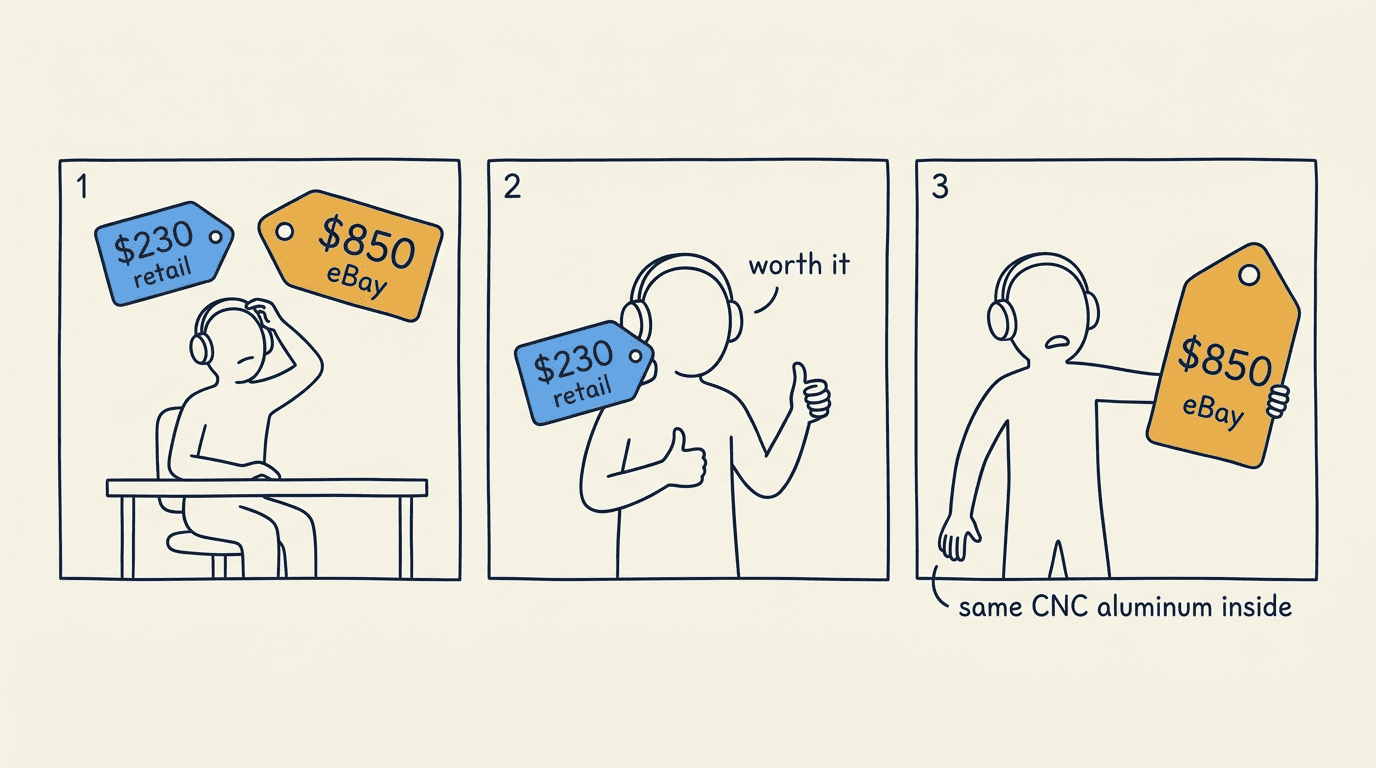
The honest framing: it’s a $174 Creator Micro 2 plus $56 of Codex-specific firmware, 32 icon keycaps, and an OpenAI logo. If you’re a daily Codex user, that $56 premium buys real workflow value. If you’re not, the Creator Micro 2 or a $50 Stream Deck Mini gives you the same programmable functionality without the ecosystem dependency.
At resell prices ($800–$900), the math stops working for almost everyone. Paying 3–4× retail for a device whose primary differentiator is firmware and keycaps — both of which could theoretically be added to a Creator Micro 2 with enough effort — is a hype premium, not a value decision. Unless you have an immediate, specific workflow need and can’t wait for a potential restock, the resell market is worth skipping.
The broader question is whether OpenAI’s approach — launching branded hardware tied tightly to its software ecosystem — signals a longer product roadmap. The kbd-1.0-codex-micro version string suggests iteration is planned. If future versions include more Agent Keys, better app integration, or broader platform support, the Codex Micro may be remembered as a first-generation proof of concept more than a finished product.